Environmental Research Letters 15 (2020) 094076. Open access, CC BY 4.0
Environmental Research Letters
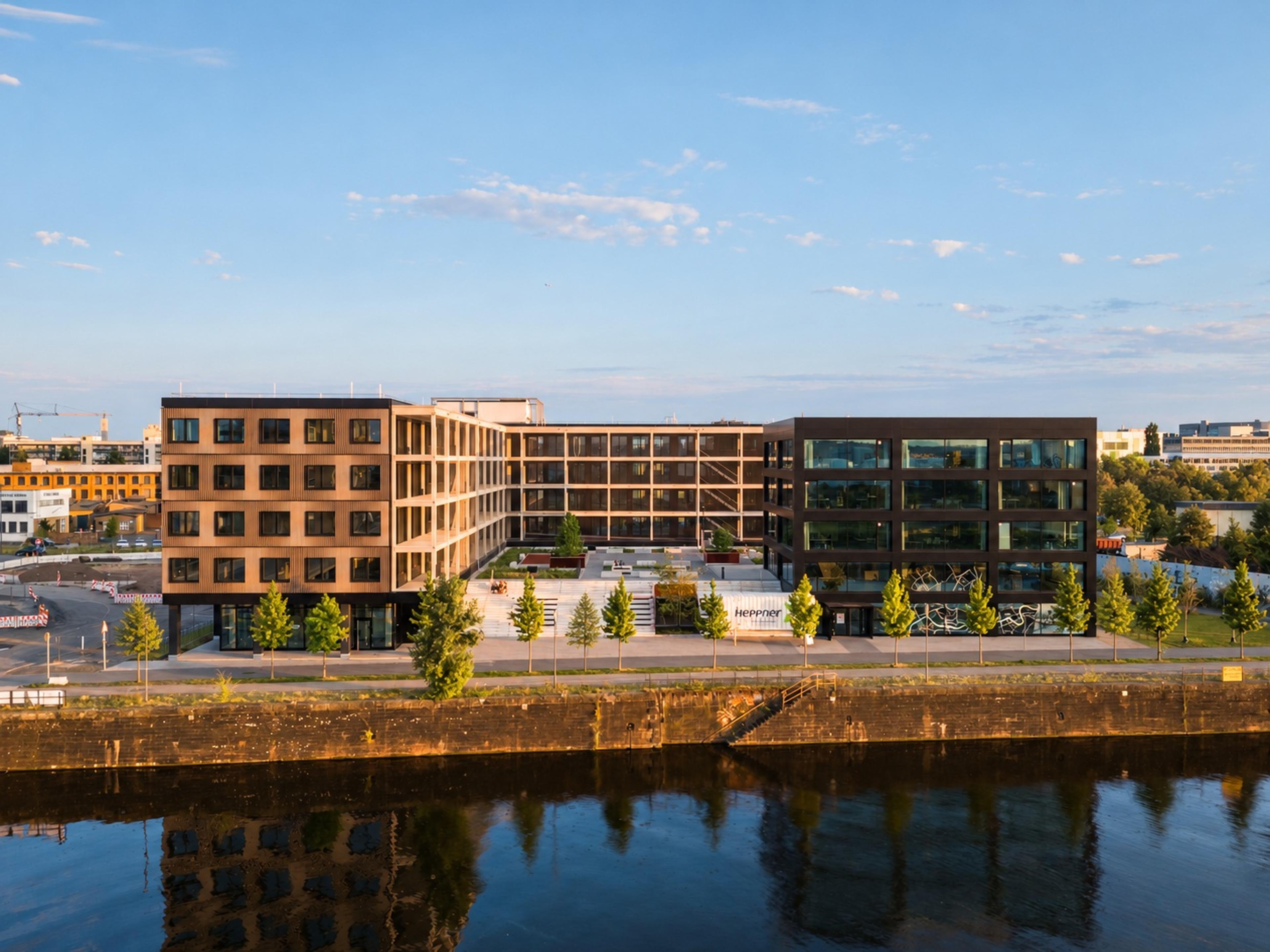
How much carbon can new buildings in Europe take up between 2020 and 2040? Ali Amiri and colleagues at Aalto University and the Finnish Environment Institute analysed 50 completed timber buildings and grouped them into three types.
Authors / institution
Ali Amiri, Juudit Ottelin, Jaana Sorvari, Seppo Junnila · Aalto University · Finnish Environment Institute
Published
2020
Three building types, four scenarios
For each of the 50 case buildings, the study calculates the carbon held per square metre. From this it derives three types of timber buildings that differ in the amount of wooden elements used. Four scenarios for new construction in Europe combine the share of timber buildings with these three types.
The result ranges from 1 to 55 million tonnes of CO₂ per year, equal to 1 to 47 per cent of the annual CO₂ emissions of the European cement industry. The authors also outline a practical scenario that can be reached with current building methods.
Although buildings produce a third of greenhouse gas emissions, it has been suggested that they might be one of the most cost-effective climate change mitigation solutions.
The amount of timber decides
Building type, wood species and building size have little influence on the result. What matters is the number and volume of wooden elements in the structure and in the interior. The authors therefore recommend that targets for carbon-neutral construction focus on the number of wooden elements. General indicators such as the share of timber construction are too coarse for this purpose.
How Timber Carbon sees it
The study gives an order of magnitude for new construction in Europe and shows that the amount of timber used is the main lever. This is also the basis of the Timber Carbon methodology, which measures the carbon in the timber structure of a building. An overview of accounting approaches is given in the study Carbon Sequestration and Storage in the Built Environment.
Full reference: Amiri, A., Ottelin, J., Sorvari, J., & Junnila, S. (2020). Cities as carbon sinks: classification of wooden buildings. Environmental Research Letters, 15(9), 094076. Open access under CC BY 4.0.
Topics